Author: Alana Dyer

  • Sleep

    Sleep is foundational to health and wellbeing. Without adequate, restful sleep, every body system struggles. Sleep is the master regulator. When you go to bed each night, your nervous system goes to work dumping accumulated toxins, organizing memories, and balancing signaling chemicals throughout the body. Good sleep supports brain and nervous system function, cardiovascular health, longevity, gut balance, hormone balance, immune function, metabolism, and mental health.

    Time to Investigate

    Lack of sleep can lead to a plethora of symptoms, including brain fog, irritability, fatigue, sugar cravings, increased perception of stress, and increased frequency and severity of illness. There are lots of things that can contribute to poor sleep, but there are some strategies that can set you up for success. Start by asking yourself a few basic questions:

    What is your wake time and bedtime? Are you getting 8 hours?

    Consistent wait times support circadian rhythms and improved sleep, so start there. What is a wake time you could pick that would work most of the time? Work back 8 hours from that time: this is your ideal bedtime.

    1. Pick your wake time and be consistent with it. Don’t hit the snooze button!
    2. Work back to your goal bed time gradually, 30 minutes per week.

    What do you do in the two hours before bed?

    If you answered television or Internet, we might have found a major cause of sleeplessness for you. The blue light from screens shuts down your body’s ability to produce melatonin, a hormone needed for sleep. Think of things you enjoy doing that don’t involve screens or bright lights. Reading, conversation, and prayer are all calming things that don’t involve blue lights, but instead set you up for a successful night’s rest. Turn off the bright white LEDs, and switch to warm or amber incandescents instead.

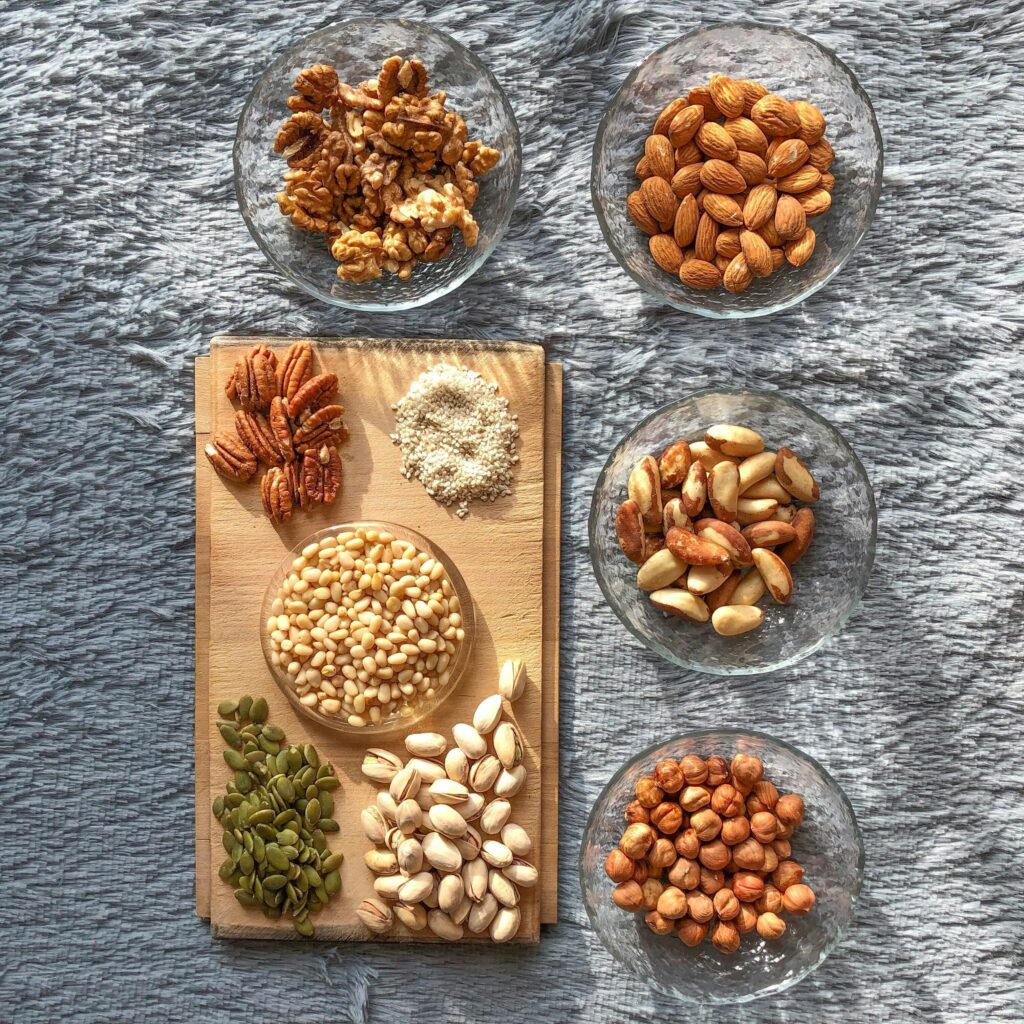
    What and when you eat can also affect sleep. It takes energy for your body to digest food, so avoid eating for two hours before bedtime. To prevent yourself from being hungry at that time, eat a satisfying dinner that has adequate protein, fiber, and healthy fats. This will help stabilize your blood sugar and prevent crashes that cause sugar cravings. If you do get hungry in the evening, pick a snack that has protein and fat to keep you from getting hungry. Nuts, seeds, and cheese are good options.

    When you get in bed, what are you doing?

    Do you turn off the light, close your eyes, and go to sleep? Or do you pick up your phone and start scrolling? Having distractions like screens while in bed confuses your brain about what this location is for. Keep work and phones in another room, so that when you lie down, your body knows it’s time for sleep.

    If you wake frequently, what is waking you up?

    Everyone’s insomnia story is a little different, so it’s important to find out what is affecting you. Once you’ve identified the issue, you’re more likely to be able to solve the problem. For example.

    Nutrients for Sleep Support

    Magnesium. Nutrient deficiencies can lead to problems with sleep, and problems with sleep can lead to nutrient deficiencies. One of the biggest contributors here is a magnesium deficiency. Magnesium calms the nervous system, relaxes the muscles, it supports blood sugar regulation, and helps prevent middle-of-the-night waking. This mineral is found in pumpkin seeds, chia seeds, almonds, black beans, quinoa, and avocado.

    Zinc. Zinc also supports deeper sleep and helps prevent middle-of-the-night waking. It’s commonly recognized for its role in immune system, reproductive, and thyroid health. You’ll find this mineral in pumpkin seeds, beef, beans, and nuts.

    Vitamin B6. This water-soluble vitamin supports sleep initiation and circadian rhythm. It is important for nervous system and cognitive health. This is found abundantly in eggs, salmon, chickpeas, chicken, sweet potato, and avocado.

    Lifestyle for Sleep Support

    Move your body. Your body needs daily movement. Aim for 10,000 steps a day for your baseline. Several times a week, Do some strength training. This doesn’t have to be anything fancy at a gym. You can use floor exercises and things you have around the house for weights. Strength supports many different body systems and overall longevity, so it’s important to build this habit. When your body works physically during the day, it’s more likely to be tired enough to sleep at night. In addition, exercise reduces cortisol levels in the body, which reduces stress and also supports sleep.

    Time your caffeine. Caffeine has a 5-hour half-life. This means that if you drink a cup of coffee with 100 mg of caffeine, in five hours there are still 50 mg of caffeine circulating in your system. 5 hours after that, there are 25. To prevent this from keeping you awake at night, drink your coffee by lunchtime.

    Another interesting quirk of coffee is that if you drink it too early, It prevents your natural morning cortisol spike that is supposed to wake you up. Try waiting one hour after waking before your first cup of coffee. It will take a few days for your body to adjust, but it will be worth it.

    20-minute rule. If you can’t fall asleep within 20 minutes, get up, leave the bedroom, and try reading a book (not something especially riveting) for 20 minutes. Then try to sleep again. If another 20 minutes goes by and you’re still awake, Get up and read for another 20 minutes. This prevents you from being frustrated lying there awake, without the overstimulation of screens.

    Taking Thoughts Captive

    If your mind tends to spiral when you’re trying to sleep, You need a plan. There are multiple physiological and emotional contributors to anxiety, But take control of the things that you can. There are a few strategies that can help redirect thought patterns and calm your mind. They take practice and persistence, but they can make a big difference at retraining your brain.

    Visualization. Think of someplace you always feel completely relaxed. Somewhere you’ve always been safe and filled up emotionally. For me, that is usually the beach at the national park where I went to college. Work through every sense, painting a picture and imagining that you can see, hear, and smell everything around you. Go slowly and think of every detail. This exercise occupies your mind so thoroughly, that the anxious thoughts fade to the background.

    Memorization and recitation. Another way to overcome anxious thoughts is to speak over them. Not necessarily out loud, but you can do that if it’s helpful. Memorize a poem, scripture, or song that contradicts your racing thoughts. Recite it to yourself to drown out the negativity.

    Plan ahead. Work on memorizing things during the day, When you’re not trying to sleep. This could perhaps be a good pre bedtime activity that doesn’t require a screen. It could also be a good morning activity that gets you in the sunshine in a chair with a book.

    Don’t Give Up!

    There are a lot of strategies here, and it takes a while to implement them and for them to have an effect. Don’t expect it to work all at once, but if you keep Working, You are likely to see improvement. If you suspect that there is something else going on, there might be underlying nutritional causes or simple supplemental solutions. I would love to talk with you about improving your sleep.

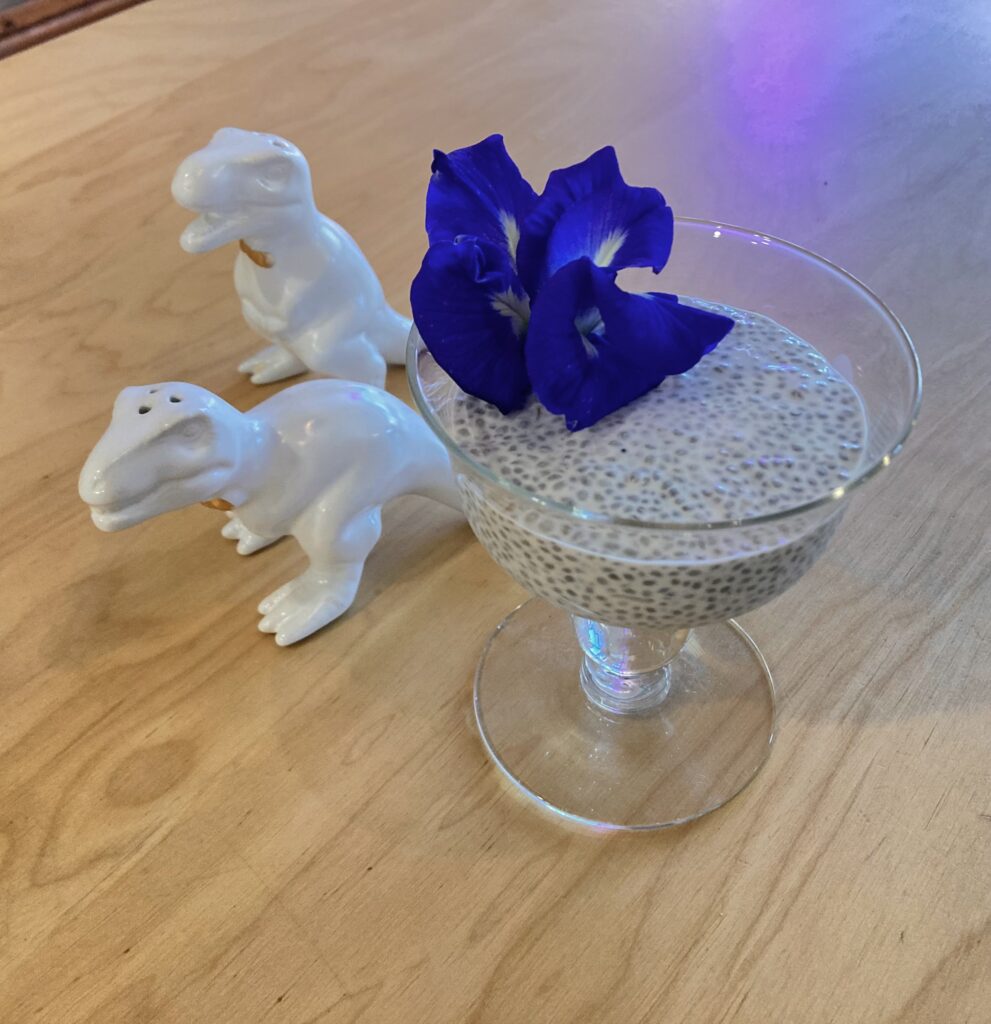
  • Chia Seed Pudding Recipe

    Chia seeds are filled with omega-3 fatty acids and soluble fiber that coats and heals the gut. This easy recipe mixes up quickly but takes a few hours to set up in the fridge.

    Ingredients

    Serves 4

    • 1 can coconut milk (unsweetened)
    • 1/8 tsp sea salt
    • 2 teaspoons vanilla extract
    • Optional: 2 tablespoons honey or 1/2 cup pureed or chopped fruit (mango, strawberry, raspberries, dates…)
    • 1/3 cup chia seeds (add these last)
    1. Combine all ingredients in a quart-sized mason jar with a tight lid and shake.
    2. Let sit for 5 minutes.
    3. Shake again, then put in the refrigerator for a few hours, until it thickens.

    The best part about using a jar to mix it: Fewer dishes!

  • Eat Real Food

    Food or “Food-like”?

    Our great-grandparents just ate food, and it nourished them. But for the last century or so, modern diets have been gradually altered, with highly processed foods now making up the vast majority of the grocery store. People were not meant to have to discern between food and food-like items. This is a skill we now have to develop in order to actually feed our bodies.

    The Dos

    Protein

    Protein supports healing, weight loss, muscle growth, and cognition. Eat 3-5 servings of unbreaded protein per day. (A serving is the size of your palm.)

    Examples:

    • Beef
    • Chicken
    • Fish
    • Eggs
    • Quinoa

    Vegetables

    All vegetables are fair game. Eat at least 1 cup of veggies with every meal. Just remember, corn and potatoes don’t count. 

    Fruit

    Fruit is packed with vitamins and potassium. Eat 2-3 fresh fruit servings/day, and avoid juice or canned.

    Fats

    Fat makes you feel full and satisfied longer. It helps you absorb vitamins like A, D, and E. And it’s important for brain health. But there are good fats and bad fats. Good fats are plain nuts and seeds, extra-virgin olive oil, grass-fed butter, and coconut oil. 

    Whole Grains and White Potatoes

    Eat these in moderation: 1/2 cup per meal is a good amount. Whole grains like quinoa, brown rice, and buckwheat are packed with minerals and fiber, but it’s important not to overdo it. 

    The Don’ts

    Avoid Processed Food

    If it comes in a box or a bag, it’s probably a lot different from how it’s found in nature. Skip this, especially while you’re working toward change. Shop the perimeter of the store and pick food you would recognize in nature. Some red flags to avoid:

    • Added sugar, including corn syrup.
    • Artificial sweeteners. These synthetic chemicals have sketchy safety profiles and multiple studies suggesting adverse reactions both immediately and over time. The havoc they cause in your body means most people don’t even lose weight as a result of using these fake sweeteners instead of real sugar. If you want something sweet occasionally, opt for stevia or monk fruit.
    • Seed oils and hydrogenated oils. These oils are unstable and tend to go rancid quickly at room temperature. They also denature with cooking, meaning by the time you eat them, they pack a hefty dose of free-radicals, molecules that cause damage in the body.
    • Preservatives. This is most of the stuff towards the end of the ingredients that you can’t pronounce and doesn’t sound like food. BHT, sodium benzoate, potassium sorbate…
    • Fruit juice. Sneaky, right? Even 100% juice is a processed food that can pack a massive sugar punch uninhibited by the fiber contained in a whole piece of fruit.

    Avoid Stimulants

    Coffee

    Many people can consume natural forms of caffeine in moderate amounts. The key here is natural forms and moderate amounts. One cup of black coffee or unsweetened tea may be well tolerated by some people, but too much creates overstimulation of the nervous system. This releases excess cortisol, the stress hormone, that triggers weight retention and metabolic dysfunction. Forms of caffeine with lots of sugar, food coloring, preservatives, and artificial flavors should be avoided altogether.

    Another key to using caffeine wisely is to avoid it for at least an hour after waking, and for at least 8 hours before bedtime. Always wait to drink it until after breakfast

    Alcohol

    There is really no benefit to drinking alcohol, and your body has to work to remove what it sees as a toxin. This is definitely not a healing food. It can be enjoyed in moderation, but what does that mean? Here are a few guidelines if you want to employ moderation:

    • Avoid drinking to the point where you feel buzzed.
    • Avoid drinking more than once in a week.
    • Avoid alcohol while you are working towards healing.
    • Drink something your great-grandmother might have had, not something filled with sugar and food coloring.
    • Keep it as a special occasion item.

    Nourish Your Body

    Remember, the goal here is nourishment. A fed body heals, so eat plenty of healthy, natural foods. Diets that leave you feeling hungry put your body into a state of “fight-or-flight”, but healing happens when we are in “rest-digest” mode. When you eat real foods, your body will gradually learn to crave what it needs, and your innate intuition about food can be restored.

    *This information is for educational purposes only, and is not intended as medical advice. Please consult with a healthcare professional before making any changes.


  • Biblical Emotion Processing

    What do emotions have to do with nutrition? Well, the body cannot be separated into physical, mental, and emotional segments. These aspects of self are interwoven, and they interact constantly. Trapped emotions affect our nervous system, which controls every part of the body, including digestion and how we use the nutrients we take in.

    As we go through life we collect negative emotions that may not be fully processed and released. In fact, because certain parts of the brain hold certain emotions and are connected to specific organs, there are emotional themes for each organ. Here are some examples:

    • Anger, frustration, and regret tend to settle in the liver and gallbladder.
    • Fear affects the kidneys and bladder.
    • The lungs hold grief.

    Most stuck emotions fall into one of 4 categories: believing an untruth, lack of faith, unforgiveness, or sin. God has given us the power to release these through prayer and scripture.

    Untruths

    Pinnochio

    Have you believed a lie? First, acknowledge the falsehood you have believed. Then replace it with truth. Often this can be done by quoting scripture. For example, if the untruth is low self-worth, remember who you are in Christ. “I am crucified in Christ, therefore I no longer live. Jesus Christ lives in me.” Gal. 2:20. This verse tells us that the Christian is emptied of himself and filled with the spirit of Jesus, whose worth is limitless. When God sees us, He views us through the blood of Christ. He loves us so much he sent His Son to die to save us, not only the whole world, but also you as an individual. Sit with this thought for a minute and pray that God’s truth will fill you and drive out all lies. 

    Unforgiveness

    Embrace; forgiveness

    Jesus repeatedly returned to the idea of forgiveness. And New Testament consequences for not forgiving are pretty intense. People are imperfect, and offenses will happen. Thankfully, we don’t have to feel forgiveness. God has designed us such that forgiveness is not a feeling. It is a choice. Make the choice to forgive, and the feeling will eventually come.

    • Try a statement something like this: “I choose as a conscious act of my will to forgive [someone, even yourself, even God] for [the specific thing or things they did].”
    • Ask God to forgive you for holding bitterness in your heart, to help you release and forgive them, and to bless the person. 
    • Whenever bitterness springs up, pray for your “enemies” as Jesus instructed. Pray that they will have health, joy, and success. And choose to feel towards them the fruit of the Spirit: love, joy, peace, patience.

    Lack of Faith

    Father tossing child in air

    Many negative emotions are anxious thoughts, worry, and fear. Each of these is a lack of faith that God will provide for us. This can be especially hard when we feel God has not provided in the way we expected. But God loves us! There are many verses that reveal God’s sovereign power and perfect provision. We may need to redefine our idea of God’s responsibilities.

    2 Timothy 1:7 – For God hath not given us the spirit of fear; but of power, and of love, and of a sound mind.

    1 Peter 5:7 – Casting all your care upon him; for he careth for you.

    Philippians 4:6 – Be anxious for nothing; but in every thing by prayer and supplication with thanksgiving let your requests be made known unto God.

    Sin

    Rotten fruit

    Sometimes the emotions we find will be sin, and need to be confessed. This includes unforgiveness and lack of faith. And as hard as it may be to hear, even some aspects of grieving can be a lack of faith or of surrender to God’s sovereignty. Confess your sin to God and enter into His goodness, mercy, forgiveness, love, and joy.

    • 1 John 1:9 – If we confess our sins, he is faithful and just to forgive us our sins, and to cleanse us from all unrighteousness.

    Peace

    If we are to experience freedom from trapped emotions, we need to acknowledge the emotional and spiritual connections to physical health, remembering we house an eternal spirit in our body.

    • 2 Corinthians 4:18 – We look not at the things which are seen, but at the things which are not seen: for the things which are seen are temporary; but the things which are not seen are eternal.